An event is not one appointment.
Work separates into phases such as build, show and teardown, each with its own timing, roles and crew requirements.
Operational growth · Heavy AV
Heavy AV asked for a mobile application to track crew hours. Understanding the operation behind that request revealed a larger constraint: growth was making coordination and administration increasingly difficult to carry through disconnected tools and manual records.
Heavy AV supplies and coordinates the people who build live events. Getting the right people, cleared and confirmed, to the right venue at the right time is central to the service.
That work depended on Google documents and spreadsheets, paper check-in sheets, individual messages, calls and emails. Confirmations had to be interpreted and recorded by a person. Hours captured on site were entered again for payroll preparation and again for invoicing.
The initial request focused on tracking crew hours. The wider operational evidence showed that time capture was only one point in a connected workflow spanning inquiry, planning, booking, confirmation, attendance and administration.
Heavy AV investigated packaged project-management, crew-scheduling and time-tracking products. The issue was structural: each product covered part of the work while leaving the business to connect the remaining pieces through spreadsheets and manual coordination.
Work separates into phases such as build, show and teardown, each with its own timing, roles and crew requirements.
A distributed contractor network cannot be treated like an internal team expected to maintain another application and login.
Rate and role changes cannot silently rewrite the meaning of work that has already happened.
Office staff, planners and on-site crew chiefs need different capabilities and genuinely different access to business data.
The OpSol decision
The engagement expanded because connected operational evidence justified connected capabilities, not because a larger predetermined package was imposed.
Understand phases, roles, decisions, records and exceptions before designing interfaces.
Design for the people who participate in the workflow without expecting them to become software users.
Allow one trusted operational record to support later coordination and administration.
Validate new behavior on real work before relying on it more broadly.
Delivered capability
The solution connects the workflow without forcing every participant into the same interface or asking the business to abandon its real operating structure.
Public inquiries become tracked leads instead of disappearing into a separate inbox, giving staff a clear place to qualify and progress each opportunity.
Events retain their real build, show and teardown structure, with crew requirements attached to each phase.
Crew can respond to an invitation through a secure browser link instead of being required to install another application.
On-site time capture creates a consistent record that can support payroll preparation and client invoicing.
From public inquiry to a visible operational pipeline.
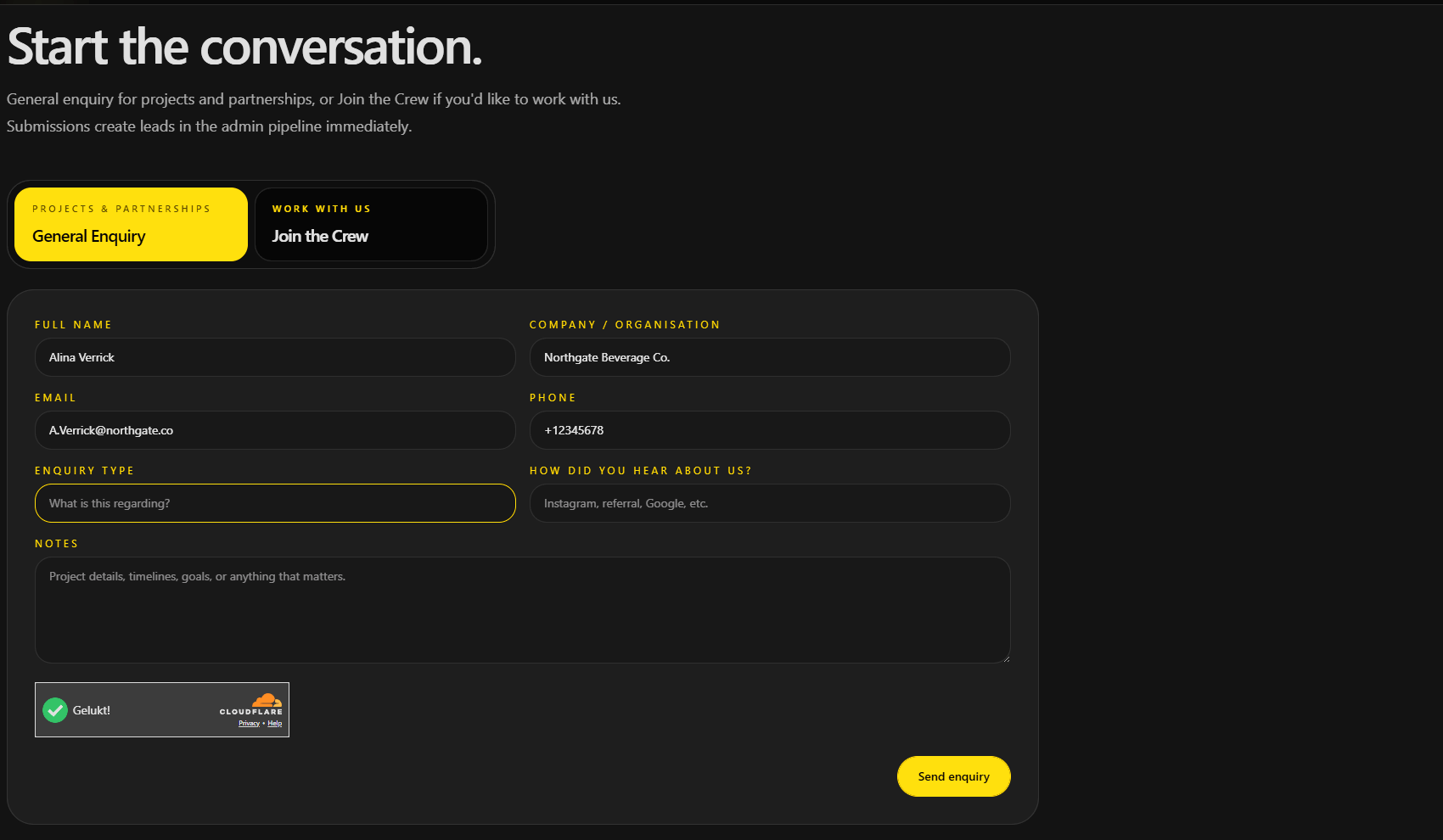
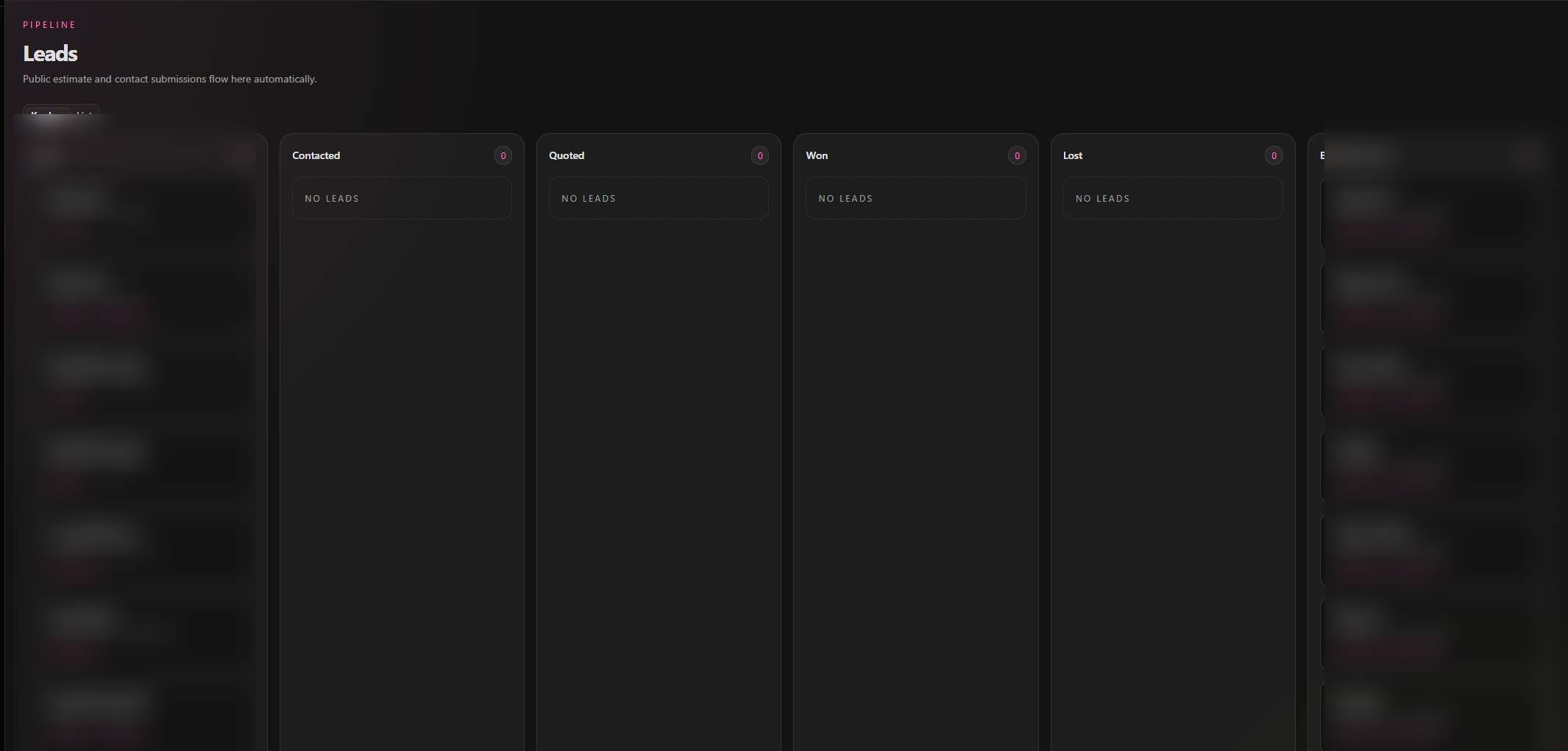
A public submission becomes visible work in the lead pipeline. Identifiable lead details and live volume counts have been redacted.
An event keeps the phases, roles and staffing state the operation actually depends on.
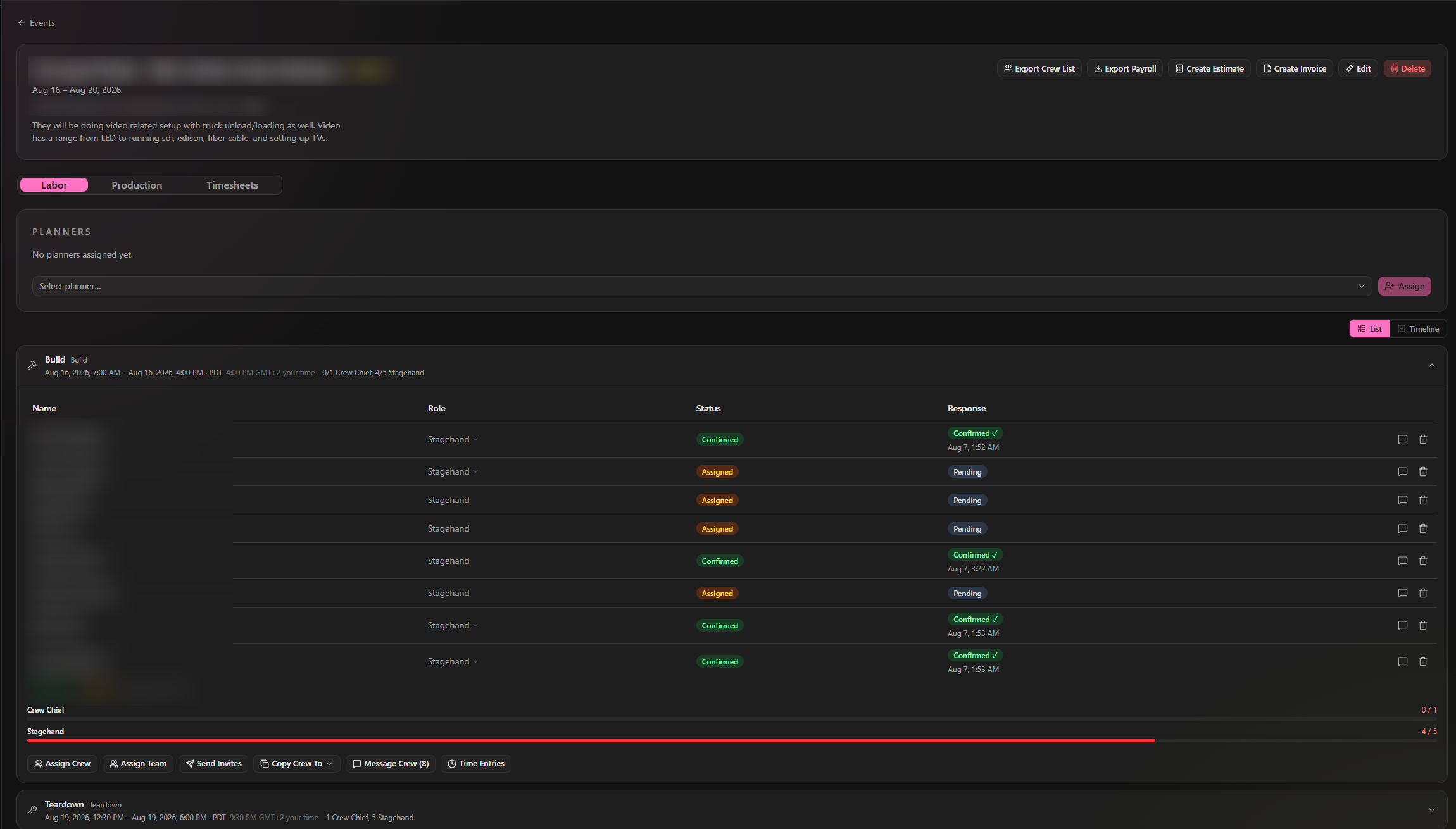
Build and teardown remain distinct phases with their own schedules, role requirements, assignments and response state. Event, address and crew identities have been redacted.
One invitation lets a contractor review and respond without installing an application or creating an account.
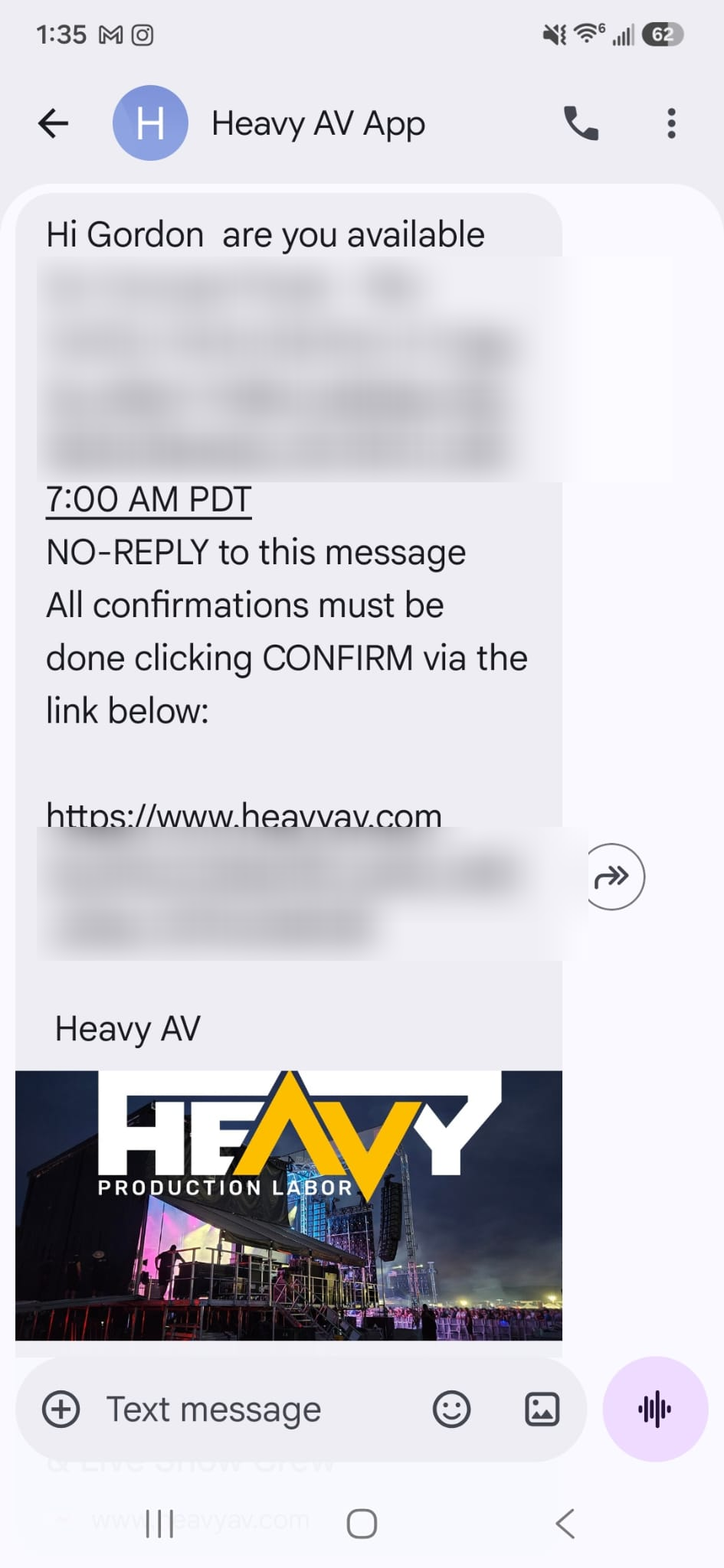
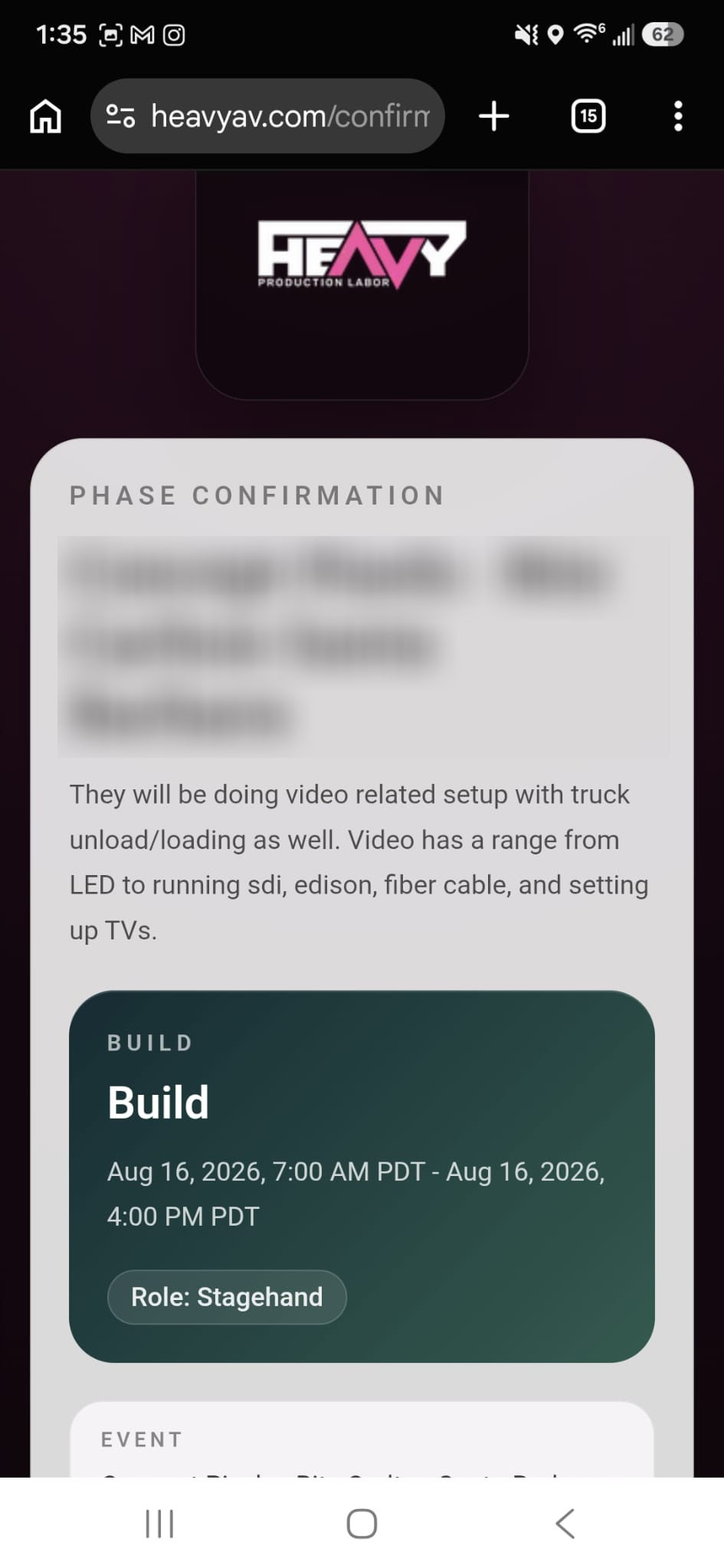
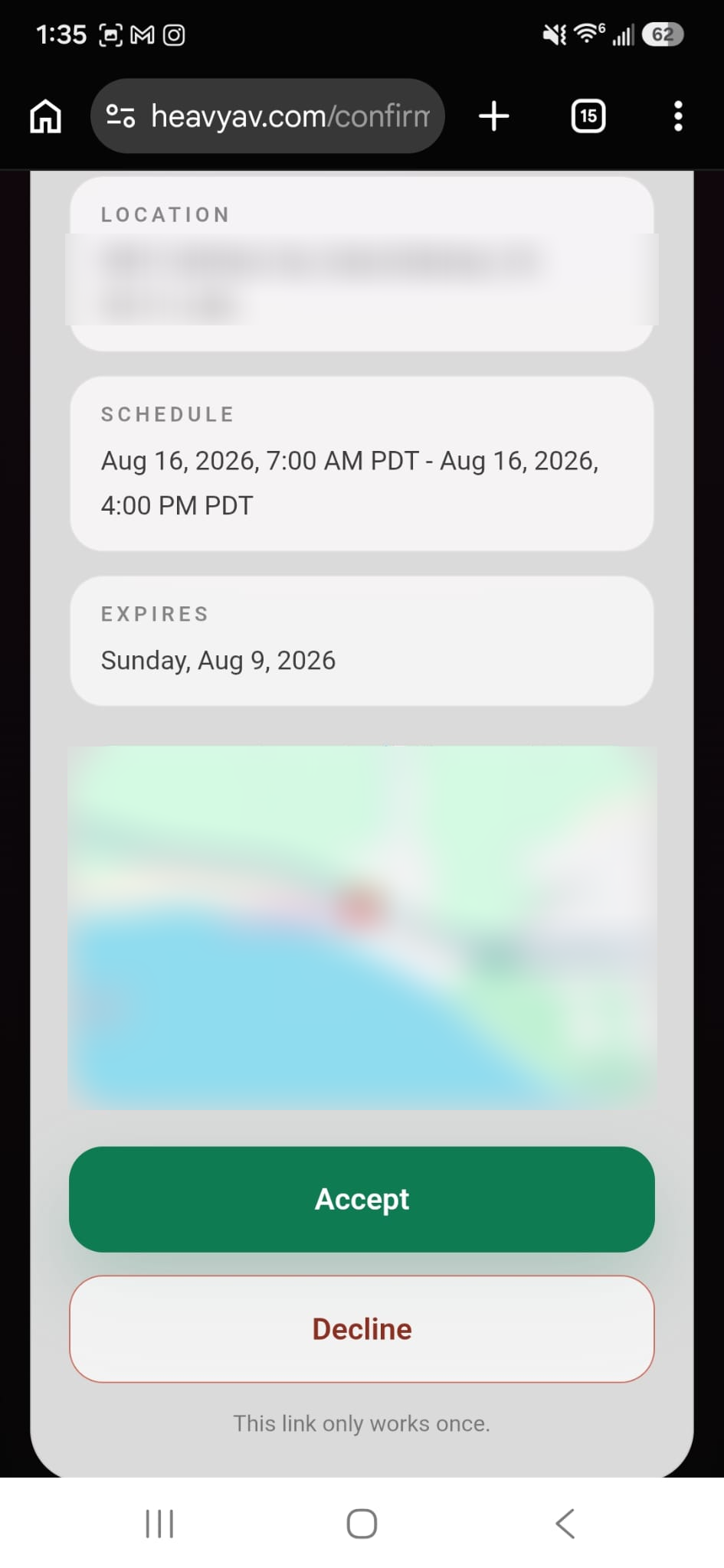
The invitation opens one secure browser page: the middle capture shows its event and phase details, while the right capture shows the response controls further down that same page. No response has been submitted in these captures. Gordon’s name is shown as Heavy AV’s founder; event, location, map, and token details have been redacted.
Controlled time records become a payroll-ready administrative output.
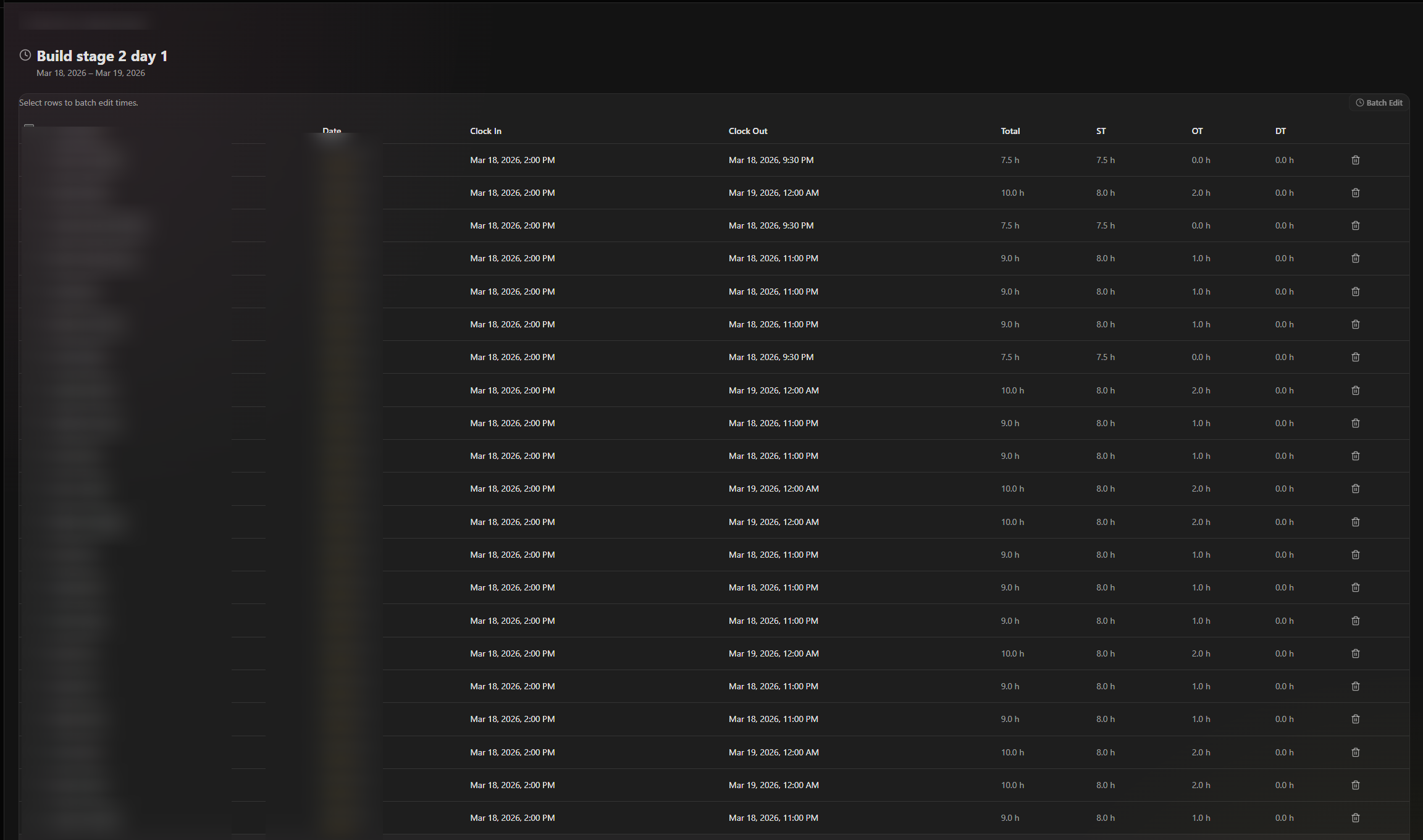
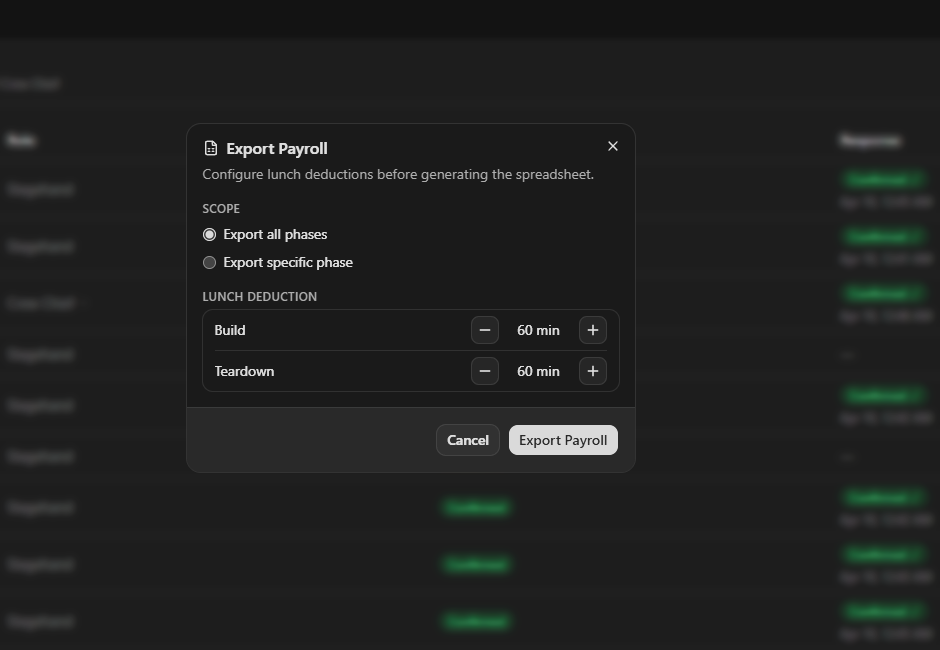
Reviewed hours retain straight-time and overtime distinctions, then move into a configurable payroll export without reconstructing the record in a separate system. Personal identities have been redacted.
Crew requirements can be represented in the same structure the business uses to plan an event. Invitations and responses become visible assignment data. On-site hours become a controlled record that supports downstream administration. Managers can coordinate work without reconstructing the current state from separate conversations and documents.
Heavy AV has since expanded beyond its earlier regional operating footprint while continuing to develop the platform with OpSol. The platform provides a foundation the team can continue extending as the operation evolves.
The lesson
Heavy AV did not need custom software simply because packaged products existed. A tailored solution made sense because growth had exposed a connected, business-specific operating model that the available combinations could not support without recreating the same manual coordination.
That is the distinction OpSol looks for: not “what can we build?” but “what is limiting the business, what capability would remove that constraint, and which solution fits the way the business actually works?”